Email : info@peakadventuretour.com

Trans-Zanskar Expedition
Zanskar in Ladakh is a vast area being aligned between the Indus Valley and the main crest of the Indian Himalayas widely being stretched in an area of over 3000 square miles and being well crested with snowy high passes. So, experiencing great trans-Zanskar ranges will bring the overwhelming grandeur being spread on you for a tremendous exciting experience.
The trans-Zanskar trekking that starts from Darcha brings the scintillating experience of crossing across the series of high mountain ranges towards the western end of the Himalayas. These ranges do comprise of the grand peaks of 6000 m (20000 foot) to form an effective barrier between the Indian provinces of Lahaul and Ladakh. Along the routes, the trekkers can find the fabulous garland of high passes including Shingo La, Parfi La, Hanumil La, Shengi La, Bumiktse La, SirSir La and Prinkti La. The trans Zanskar trekking will bring the dynamic opportunity of linking these contrasting mountain ranges to appreciate the great challenges of the Indian Himalayan treks.
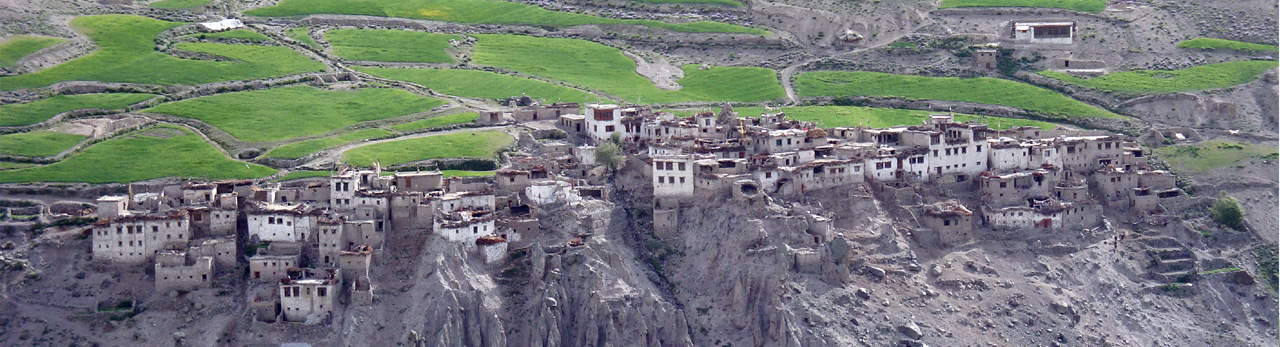
Further, the trek will carry towards the most ancient kingdom of Ladakh to bring the hardy lifestyle of the local inhabitants among the scintillating landscapes to include some of the chivalric villages nestled into cliff sides with irrigated fields of buckwheat and green pea patches like Phuktal, Lingshed and Lamayuru. Trekking across the trans-Zanskar region will also let the trekkers to get through some of the ancient monasteries like- Lingshed, Karsha, Sani, Bardan and Phuktal. This challenging expedition all around the fascinating Zanskar area can best be experienced during the months of Mid-June to Mid-October.
Day 01 : Delhi
Upon arrival at Delhi airport met our representative and then transfer to hotel for overnight stay.
Day 02 : Delhi - Manali (2050 M)
In the morning after breakfast take a guided sightseeing tour of Delhi visiting Red Fort built in 1648 by Mughal Emperor Shah Jahan, Jama Masjid, one of the largest mosques in India, Raj Ghat and Shantivan, the cremation sites of Mahatma Gandhi and Jawaharlal Lal Nehru, Humayun Tomb, India Gate (War Memorial Arch), Laxmi Narayan Temple and then pass through the government buildings, the President House and the Parliament House. By evening drive to Manali by AC Volvo Coach at 18:00 hrs. Overnight journey.
Day 03 : Manali (2050 M)
Arrival at Manali by morning and then transfer to hotel. At leisure or a tour of attractive places like Hadimba Devi temple, Vashisht Hot Springs, Club house etc. can be taken. Overnight in the hotel.
Day 04 : Manali - Darcha (3400 M) 180 kms/5-6 hrs
In the morning after breakfast drive along the Beas River upstream long the true left bank through the several villages to the Rohtang pass (4050 m). Down hill drive to the Gramphu and passport check point at Koksar. Reach Keylong the tribal dist. headquarter, 35 kms a head campsite at Darcha. We will camp near the river at Darcha. Overnight in the tent.
Day 05 : Darcha - Palemo (3600 m) 5.30 hrs
Get ready for your day one trek to Palemo. After 30 minutes walk check post is established, visit the tiny hamlet and continue high over the Zanskar Chhu River through the last village of the valley (Rarick and Chhika) after few hour walk camp site is visible on the right side of the Zanskar Chhu (river). Overnight in the tent.
Day 06 : Palamo - Zanskar Sumdo (4000 m) 6 hrs
Gradual walk through the boulders and meadows, shepherds from the Kangra valley can be seen with their flocks. We also have to cross streams twice or thrice enroute. Arrive Zanskar Sumdo (4000 M), a good camping ground for the overnight in the Tent.
Day 07 : Zanskar Sumdo – Chuminakpo (4500 m) 7.30 hrs
Today it’s trekking high up on mountain side. First cross the river by a hanging bridge and then steep climb up for about an hour and then follow the trek on a narrow valley until you reach Ramjak, a small meadow. Thereafter to Chuminakpo (4800 m). Overnight in the tent.
Day 08 : Chuminakpo - Lahkhang (4300 m) over Shingo la (5090 m) 7-8 hrs
Path leads over moraines, ice chilled stream may have to crossed, over snow and glacier, suddenly prayer flags can be seen flattering over the pass. Descend to the Zanskar valley, before arriving at campsite one have to wade through Kargyak Chhu, beautiful campsite on the bank of Lhakhang Chhu. Overnight in the tent.
Day 09 : Lukung - Kargyak (4060 m) 5 hrs
Easy trek beside the right bank of Kargyak Chhu and foot of the Gumboranjom tower; a chilled stream has to cross. An opportunity to see closely the herds of yaks, Marmots are whistling around the meadow and plays hide and seek. Long series of Mane wall and Chhorten are a symbol to reach Kargyak village, it houses a small Gompa on the top of village. Overnight in the tent.
Day 10 : Kargayak - Purni (3800 m) 6 hrs
Trail goes through Tanze, Kuru, Testa and Yal. Villages Farmer can be seen cultivating their fields with melodious song of Zanskar. Reached Purni, situated on the confluence of the Tsarap and Kargyak Chhu. Overnight in the tent.
Day 11 : Prune - Phugtal - Gyalbokh
Today we visit Phugtal Gompa, one of the oldest monasteries in Zanskar and spectacularly located. Passing through a narrow valley and the splendid gorge we cross the bridge and come to a small plateau sprinkled with Chorten and religious banners. From here we see one of the most spectacular sights of the Phugtal Monastery built in a cave. The monastery belongs to the tradition of the Gelugpas (Yellow Hats). Back to Prune and further trekking up on the left bank of Tsarap river after crossing the bridge. Arrive Gyalbokh village. Overnight in tent.(6-7 hrs).
Day 12 : Gyalbokh - Raru (3700)
Several difficult stretches for the horses and mules. A gradual climb before coming to small plateau and the gradual descending towards to Raru village. Overnight in Tent. (6-7 hrs)
Day 13 : Raru - Mone – Padum
It’s an easy trekking down on motorable road. After an hour's trekking we come to a small village called Mone. Visit a Gompa there. Further enroute after two hours is Bardan Gompa, situated on mountain plateau. Arrive Padum (3650 m), the capital of Zanskar where two rivers Doda and Tsarap join to form Zanskar River. Overnight in Tent. (6-7 hrs)
Day 14 :
Padum the day is free to acclimatise.
Day 15 : Padum- Karsha – Rinam
From Padum head towards Pipiting and follow a dusty plain towards the Doda River and reach bridge. Cross the bridge to reach Karsha Monastery dating back to the 16th century. It is the largest and the wealthiest of all monasteries in Zanskar. Further trekking down on the plain path is Rinam. Overnight in Tent. (6-7 hrs).
Day 16 : Rinam – Pishu (3400 m) 3 hrs via Zangla 6 hrs
Flat trail beside the Zanskar River, visit Zangla village a ancient capital of Zanskar, ruin of castle and Nunery can be visited, small Gompa in the village in family house shifted from the old fort houses some old Thanka and statues. After visiting this village back to the beautiful camp site of Pishu. Overnight in the tent.
Day 17 : Pissu – Hanumil (3550 m) 5 hrs
Moranic track leading up and down, Crossing a bridge over stream. Colorful Chorten appear before arriving in the village, explore the Pidmo village. 2 hours walk till campsite of Hanumil. Overnight in the tent
Day 18 : Hanumil - Snertse (4200 m) over Parfila (3900 m) 6 hrs
Now onwards the path leads us away from Zanskar River. Climb up to Parfi-La (3950 m) and then steep descend until reaching the Oma-Chu River. Crossing over the bridge and further climb up a 500 m sandy slope we reach the sheepfolds of Snertse.
Day 19 : Snertse - Hanumil La – Lingshed
Long gradual ascend towards Hanumil-La (4877 m). Reach the top of Hanumil-La and then steep descent about 1000 meters. Again climb about 400 meter up along the mountain side, cross a small pass and then easy descent to Lingshed (3800 m). Overnight in Tent. (7-8 hrs)
Day 20 : Lingshed - Foot of Shinge - La
Gradual one hour climb to the Margum La (4200 m) then pass an escarpment, go along the slope. Gentle descent towards the villages of Gongma and Skiumpata. Steep climb to Kiupa-la (3850 m) and then gradual climb along mountainside to the foot of Shinge-la. Overnight in Tent.
Day 21 : Foot of Shinge - La - Photoskar
About one to two hours steep climb to Shinge-la (5060 m) and then descending to a broad valley. Again gentle climb towards Bumiktse-la (4200 m) and descending towards Photoskar (3750 m), a splendid village. Overnight in Tent. (7-8 hrs).
Day 22 : Photoskar - SirSir La – Hanupatta
From Photoskar it's gentle climb up to a large Chorten, then long ascent of SirSir-la (4990 m). An easy descent to the river and village Hanupatta (3450 m). Overnight IN Tent. (6-7 hrs).
Day 23 : Hanupatta – Shilla
Trek down the slope until entering the gorge and the bridge at the junction of the two rivers. Some easy some difficult stretches of fallen rocks until Phenji La. Afterwards it’s trekking on motorable road up to Wanla (3245 m). Overnight in Tent. (5-6 hrs).
Day 24 : Shilla - Lamayuru – Leh
Last day of our trekking. We pass the Shilla village to cross Prinkti-la (3726 m) to reach Lamayuru (3 hrs). Visit monastery and drive to Leh (3500 m). Overnight in hotel.
Day 25 : Leh – Shey – Thiksey - Hemis
On this day you will go a sightseeing trip to some ancient monasteries in this area.
Shey Gompa is about 15 kms from Leh. It used to be the summer palace of the kings of Ladakh. There are lots of Stupas and Gompas built around the palace. Shey palace was built by Deldan Namgyal in the beginning of 17’Th century AD. Main attraction in Shey is the 12m Shakyamuni Buddha statue inside the Dresthang Gompa.
Thiksey Gompa, close to Shey is about 17 kms from Leh. The monastery is considered to be one of the most beautiful in Ladakh and belongs to the Gelukspa order.
Hemis, about 45 kms south of Leh it is one of the most famous and largest monastery in Ladakh. It belongs to the Drukpa order and was founded in the early 17’Th century. The setting is perfect with the monastery cradled in a lovely valley, surrounded by streams and fronted by long Mani walls. Overnight stay at the guest house.
Day 26 : Leh – Delhi
Early morning transfer to the airport for flight to Delhi. Overnight in Hotel.
Day 27 : Delhi –Departure
Transfer to the International Airport.
Trip & Services Ends Here.
